Blog Article
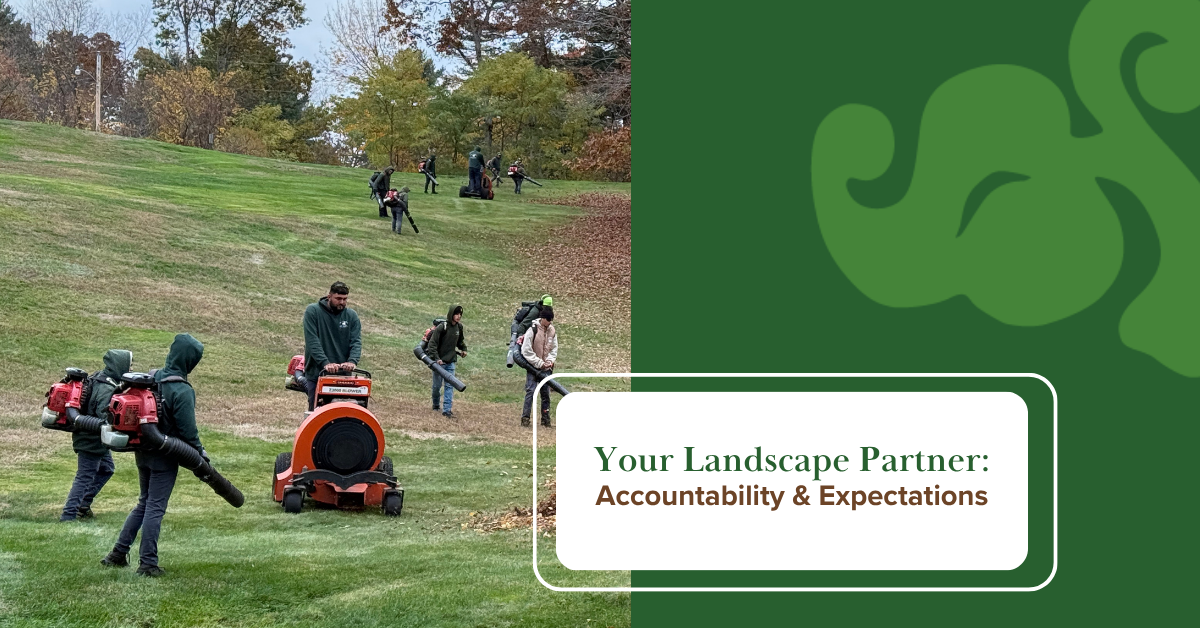
Your Landscape Partner: Accountability & Expectations
What Should Your Landscaping Company Actually Be Responsible For— and How Do You Know They’re Delivering?
A full-service landscaping company should do more than keep your lawn mowed and your property looking presentable. Routine property maintenance is the baseline — and it should be executed with consistency. Whether you’re a homeowner or manage a commercial property, your landscape is a significant investment that requires ongoing planning, care, and expertise. If you’ve wondered whether you’re getting the level of service you’re paying for from your landscape company, here’s what to look out for.
The best landscape care is proactive, not reactive. A reliable partner should make thoughtful recommendations and address issues before they become problems. They should understand your entire property, anticipate its needs, communicate clearly, and take responsibility for the details that keep your landscape healthy, safe, functional, and looking its best year-round.
Professional Landscape Care Starts with a Plan
Landscape maintenance starts with understanding your property and creating a plan tailored to its specific needs. For residential clients, that means a crew that knows your property well and pays attention to how your landscape looks and performs across every season.
For commercial properties, it also means understanding the operational demands, liability exposure, and appearance standards that reflect on your business. A good plan should also evolve. Landscapes change throughout the year, and your maintenance program should change with them. Your landscaping company should be looking at:
- The condition of your lawn, plants, trees, and landscape beds
- Irrigation performance and water needs
- Seasonal pruning and maintenance requirements
- Plant health, pests, and potential disease issues
- Drainage and areas vulnerable to water or erosion
- Hardscape and landscape feature conditions
- Safety concerns, including trees, walkways, and access areas
- Seasonal priorities and upcoming property needs
Landscape Maintenance: Beyond the Basics
Mowing, edging, and leaf clearing are important, but they’re just one part of comprehensive landscape maintenance. Consistent care should protect the long-term health and appearance of your landscape. Depending on your property, a maintenance program may include:
- Regular mowing, edging, and cleanup
- Bed maintenance, weeding, and fine gardening
- Seasonal pruning and plant care
- Mulching
- Plant health monitoring
- Tree inspections and care
- Irrigation monitoring and adjustments
- Spring and fall cleanups
- Lawn care and turf monitoring
- Seasonal annuals, containers, and landscape enhancements
- Storm cleanup and responsive property support
Consistent Monitoring: Identifying and Addressing Problems
One of the biggest advantages of working with a professional landscaping partner is having an experienced team that knows what to look for. Small issues can become expensive problems over time. A declining tree, drainage issue, or pest infestation may not be obvious to a property owner or manager. The best service providers identify concerns early and bring them to your attention with recommendations for addressing them. Your landscaping company should be paying attention to:
- Changes in plant or tree health
- Signs of insects or disease
- Turf stress and irrigation problems
- Storm or weather-related damage
- Tree hazards or dead limbs
- Drainage issues and standing water
- Erosion or soil problems
- Damage to hardscapes and other landscape features
Local Expertise: Understanding New England’s Seasons
New England landscapes don’t stay the same from one month to the next. Spring cleanup, summer growth, fall preparation, and winter weather all require a different approach. Coastal properties, lakefront homes, wooded residential lots, and commercial properties each have different considerations when it comes to weather, soil, drainage, plant selection, irrigation, trees, and seasonal maintenance.
Effective landscape management requires looking ahead. Your partner should have regional expertise and a clear plan for every season, while remaining flexible enough to respond to changing conditions. A year-round approach should include:
Spring: Cleanup, pruning, irrigation startup, lawn preparation, plant health monitoring, and preparation for the growing season.
Summer: Consistent mowing and bed care, irrigation management, pruning, plant monitoring, and pest and disease prevention.
Fall: Leaf and debris cleanup, seasonal pruning, turf preparation, irrigation winterization, and winter prep.
Winter: Tree inspections, storm damage assessment, winter pruning when appropriate, monitoring for weather-related damage, and planning for the coming season. For commercial properties, winter planning may also include snow and ice management, pre-storm preparation, access planning, and ongoing monitoring.
Clear Communication and Accountability
An important part of being a trusted landscape partner is communication. You should never have to wonder what work has been completed, whether an issue was noticed, or when a recommended improvement will be addressed. Your landscaping company should provide:
- Clear service expectations and reliable scheduling
- Updates when weather or site conditions affect the work
- Honest communication about what is working and what needs attention
- Recommendations for improvements, repairs, or seasonal enhancements
- Responsive replies when concerns arise
- A single point of contact who knows your property and can answer your questions
- Documentation of services performed
Plant Health Care: Proactive, Not Reactive
It may not be apparent to a homeowner when plants are under stress. By the time visible damage appears, the underlying issue — whether it’s pests, disease, or a soil deficiency — has typically been building for some time. Ongoing monitoring is essential to keeping a property healthy through changing weather and growing conditions. When issues are identified early, solutions are usually simpler, more effective, and less costly than waiting until damage has occurred. Your landscaping company should be checking for:
- Heat, drought, or overwatering stress
- Yellowing, browning, spotting, or wilting foliage
- Insect activity, fungal issues, or disease
- Signs of declining plant vigor
- Compacted soil, thinning turf, or poor lawn performance
- Damage caused by storms, wildlife, or changing site conditions
Tree Care: Safety and Long-Term Health
Trees are among the most valuable elements of a residential or commercial landscape, and proper care isn’t just about aesthetics. It’s about structure, safety, and protecting your investment. Shrubs, ornamentals, and mature trees require more than occasional trimming. Professional pruning supports healthy growth, maintains shape, improves airflow, and helps reduce potential safety concerns around structures, driveways, walkways, and utility lines. A qualified landscape partner should be equipped to handle:
- Pruning on species-appropriate cycles to support growth
- Deadwood removal or corrective pruning
- Certified arborist assessments of tree health
- Identification and treatment of disease, pest damage, and decline
- Storm-damage cleanup and risk reduction
- Cabling, bracing, or removal when safety is a concern
- Removal when a tree poses a safety risk or is beyond recovery
Irrigation: Efficiency Is Part of the Job
Irrigation is one of the most important tools in maintaining a healthy landscape, but it needs regular attention to perform well. An irrigation system that runs on the same schedule in May as it does in August isn’t doing its job. Efficient irrigation means making adjustments as temperatures rise, plantings grow, or weather conditions change. The goal is to deliver the right amount of water in the right places while reducing waste. Your landscaping company should be responsible for:
- On time seasonal startup and winterization
- Regular checks to catch coverage gaps, damaged heads, or inefficiencies
- Controller adjustments as weather conditions and plant needs shift
- Monitoring for dry spots, drainage issues, and water waste
- Recommending efficient upgrades when needed
- Prompt response to system issues before they damage turf or plantings
Piscataqua Landscaping & Tree Service: A Better Standard of Care
At Piscataqua Landscaping & Tree Service, we believe exceptional landscapes require a thoughtful, year-round approach. For nearly 50 years, we’ve cared for properties across the NH Seacoast, Lakes Region, and greater Maine with consistency, communication, and a long-term view of the landscape’s health and value. Our experienced team will identify needs, communicate recommendations, and help you make informed decisions about ongoing care and future improvements.
Property maintenance, tree services, irrigation, lighting, plant health care, landscape construction, and commercial snow management are all delivered by one reliable, locally rooted team. That means better continuity and a crew that understands your property across every season. Whether you own a private residence or manage a commercial property, Piscataqua brings the depth of service and regional expertise to provide dependable, comprehensive care.
One Call. One Company.
Your landscaping company should make your property better and your life easier. They should feel like a trusted partner who understands your property, anticipates its needs, communicates with you, and takes pride in keeping it looking and performing its best. That’s the standard Piscataqua Landscaping & Tree Service brings to every property we care for.
From ongoing residential property maintenance to comprehensive commercial landscape management, we bring together the people, skills, and services needed to care for exceptional properties throughout the year. Your property deserves more than the minimum. Contact us and find out what a genuinely full-service partnership looks like for your property.